
When evaluating the manufacturing of a mould for rubber technical articles, one of the first elements taken into account is inevitably the investment required.
But evaluating a mould only on the basis of the initial investment means observing a very limited part of its impact on the production process.
A rubber mould can be used for thousands of cycles and, throughout its operational life, can affect the consumption of raw material, waste, productivity, quality of moulded articles, maintenance activities and continuity of production.
For this reason, to the question “How much does a mould cost for rubber technical articles?” another should follow:
“What value can this investment generate over time?”
That’s where the perspective changes.
What does the investment in a rubber technical article mould depend on?
There is no standard mould and, consequently, there is no standard investment.
The design of a rubber mould starts from the article that must be produced and from the conditions in which the mould will have to work.
Geometry and complexity of the component, number of cavities, technology and moulding system, characteristics of the compound, necessary processing, materials used for the construction of the mould and any surface treatments are some of the elements to be considered.
Even two moulds intended for the production of the same article can therefore be designed in a different way, because the volumes, the presses used, the compounds and the production requirements can be different.
It is precisely here that the role of the mouldmaker becomes decisive: designing a mould for technical rubber articles does not only mean making it capable of producing a certain component, but considering how it will last over time.
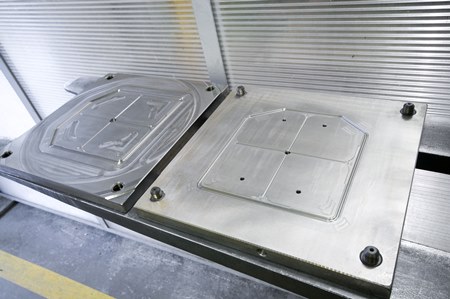
A rubber mould is an investment that continues over time
Once in the press, the mould becomes an integral part of the production process.
Its efficiency can affect the amount of compound used, the regularity of production, the ease of extraction of the articles, the amount of waste generated and the interventions necessary to keep it in optimal condition.
It is therefore useful to think about considering the investment throughout its entire life cycle.
This does not necessarily mean choosing the most technically complex solution or the one that requires the major initial investment.
It means identifying the most appropriate mould for application, production volumes and the conditions under which it will be used.
Because the value of the investment depends not only on the mould that is delivered, but on the performance it will be able to maintain during production.
The design of the rubber mould can improve production efficiency
In the moulding of technical rubber articles, even seemingly small variations can become significant when multiplied by hundreds of production cycles.
This is the case with the consumption of the compound.
The mould injection system, the number of cavities and the distribution of the material can affect both the amount of raw material used and the production capacity.
A case analyzed by OCS makes this principle concrete. A standard 12-cavity mould generated 27 grams of waste per cycle. The design of a mould with a 4-nozzle injection system and 16 cavities has reduced the waste to 14 grams per cycle.
A difference of 13 grams may seem contained when observed on the single cycle. But, multiplied by the number of cycles carried out during a day of production, it can result in a significant amount of raw material saved.
The economic impact depends naturally on the number of cycles, the production shifts and the price of the compound used. In the case of high-value compounds, such as FKM Peroxide, saving over a day of work over two shifts can become very significant, arriving, under certain production conditions, even at 1,000 euros per day.
To this is added a second element: the increase in the number of cavities allows to obtain more articles with each cycle, increasing the production capacity of the mould with the same number of cycles carried out. The advantage, therefore, is not just about reducing the gap. A different design of the rubber mould can simultaneously affect the use of the raw material and productivity.
It is one of the aspects that are likely to remain invisible when the investment in the mould is evaluated exclusively in the initial phase.
Duration of rubber moulds: what factors affect over time?
Every mould is inevitably subject to wear.
Wear can be progressively manifested through signals that also affect the result of moulding: formation of burrs, difficulties in detachment or defects that can make the articles non-compliant.
For this reason, preserving the characteristics of the mould over time means protecting the investment made to achieve it.
The longer a mould manages to work under the conditions for which it was designed, the greater the number of production cycles on which that investment can generate value.
The durability of the mould, therefore, is not just a technical feature. It is a variable to consider in the assessment of its overall efficiency.
Chrome plating of rubber moulds: protect performance and durability
The choice of surface treatments for rubber and silicone moulds should start from the conditions in which the mould will have to work and from the compound used.
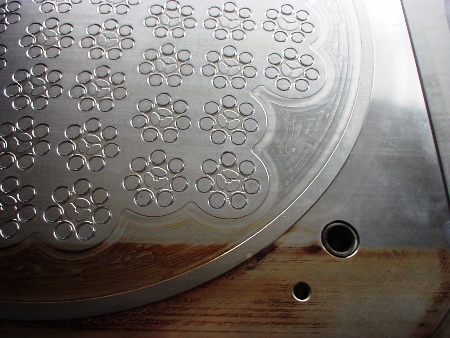
Chrome plating of rubber moulds can increase resistance to abrasion, corrosion and oxidation, helping to prolong the life of the mould.
Under certain conditions, chrome plating can triple the life of a rubber mould compared to a non-chrome-plated mould.
But protecting the surface is not the only goal.
Chrome plating of the mould can also facilitate the detachment of the articles. When the workpiece does not separate properly from the surface, in fact, it can break or have defects that determine its waste.
The combination of chrome plating and satinizing of rubber moulds can further facilitate detachment, especially in the presence of particularly adhesive compounds, limiting the so-called suction cup effect.
A properly treated surface can also make the cleaning and maintenance of the mould easier.
Also in this case, therefore, the surface treatment must be evaluated with respect to the contribution it can make to the performance, maintenance and durability of the rubber mould over time.
Maintenance of rubber moulds: protect the investment over time
The productive life of a mould does not depend only on how it was designed and built. It also depends on what happens next.
Effective maintenance of rubber moulds should be anticipated, well-planned and customized according to the characteristics of the mould and its conditions of use.
Waiting for the appearance of a problem can mean intervening when wear and tear has already started to produce consequences on production: non-compliant articles, greater waste, need for rework or production stoppages.
Preventive maintenance of the mould allows you to recognize the deterioration signals first.
At the end of a production cycle it is important, for example, to check the condition of the mould, the centering and the state of chrome plating. The observation of the latest articles produced can also provide useful information to identify any anomalies.
Even more effective is to build over time a real history of the mould, recording production cycles, conditions detected and interventions carried out.
This allows you to schedule maintenance and intervene at the most appropriate time, instead of waiting for a small imperfection to evolve into a more important production problem.
The maintenance of rubber moylds, therefore, is not simply a post-production activity: it is part of the strategy with which the investment made in the mould is protected.
FAQ on moulds for rubber technical articles
How much does a mould cost for rubber technical articles?
The investment required to make a mould for rubber technical articles depends on the specific characteristics of the project. Geometry of the article, number of cavities, injection system, compounds used, processing, materials and surface treatments are some of the variables to consider. For this reason, there is no standard investment valid for all moulds.
What does the cost of a rubber mould depend on?
The investment for a rubber mould depends on the complexity of the article to be produced and the technical characteristics necessary to obtain the required volumes and performance. The assessment should also consider not only the initial investment, but the productivity, durability and maintenance needs of the mould over time.
What is the chrome plating of rubber moulds for?
The chrome plating of rubber moulds increases the surface resistance to abrasion, corrosion and oxidation. It can also facilitate the detachment of articles, simplify cleaning operations and help to extend the production life of the mould.
How long can a rubber mould last?
It is not possible to establish an equal duration for all rubber moulds. The life of the mould depends on the material, geometry, molding technology, compound used, surface treatment and conditions of use, cleaning and maintenance.
Why is the maintenance of rubber moulds important?
The maintenance of rubber moulds allows to progressively identify any wear signals and schedule the interventions before they can affect the production. Preventive and planned maintenance helps to protect the performance of the mold and the investment made.
When should you chrome plate a rubber mould?
The choice of chrome plating of the mould must be evaluated according to the compound, the abrasiveness of the material, the production conditions and the performance required. Chrome plating can be especially useful when it is necessary to increase the protection of the surface, facilitate cleaning and improve the detachment of articles.
How to evaluate the investment in a rubber mould?
The investment should be assessed considering the entire productive life of the mould. In addition to its realization, it is useful to consider the consumption of raw material, waste, productivity, quality of articles, maintenance, production continuity and durability of the mould.
How can raw material scraps be reduced in rubber and silicone moulding?
When moulding rubber technical articles, it is important to consider the age of the mould. The percentage of waste becomes greater with the increase in the number of moulding cycles made and, consequently, on the degree of wear of the mould. Chrome plating is an excellent treatment to reduce waste and facilitate the detachment of the pieces avoiding lacerations and / or defects.
The value of a mould for technical rubber articles is measured over time
How much does a mould for rubber technical articles really cost?
The answer cannot be contained only in a quote.
To evaluate the investment, it is necessary to consider what the mould will be able to generate during its productive life: use of the raw material, waste, productivity, quality of the articles, maintenance, continuity of production and duration.
It is the transition from a buying logic to an investment logic.
A mould designed correctly for the application to which it is intended, protected through the most appropriate surface treatments and maintained over time can contribute to the efficiency of the process for thousands of cycles.
For this reason, the value of a mould is measured not only when it is made, but during all the time it produces.
For over 50 years OCS has been designing and manufacturing moulds for technical articles in rubber and silicone, considering not only the characteristics of the article to be obtained, but also the production conditions in which the mould will have to work.
Are you evaluating a new mould for rubber or silicone or do you want to check if a mould already in production can be optimized? Contact OCS and compare with our technical team.