

In the rubber moulding industry, even the smallest variation in mold accuracy can affect product quality and production efficiency.
Defects such as the creation of too thick burr on the part or the difficulty of extracting the article are never accidental: they indicate that something in the mold-process system is altering.
Understanding where the problem arises and intervening in a targeted manner is essential to avoid machine downtime and maintain constant quality.
Mould centering: a detail that determines quality
Among the most influential factors in rubber molding is the centering of the mould.
It is what ensures perfect alignment between the two halves of the mold and the correct distribution of the material during vulcanization.
When the centering loses precision, even by a few thousandths, the consequences can be immediate:
- off-center not in tolerance
- dimensional defects on the workpiece
- Material spillage
- Increased scrap and the need for rework
- Unexpected machine downtime
All this often arises from a natural phenomenon: the wear and tear of the pins and sockets. In these cases, the sockets and pins must be replaced immediately to restore the centering. O.C.S., in addition to replacing the pins and bushes, makes a cold check of the moulding to ensure perfect centring, then sectioning the piece and checking it with special tools or machinery.
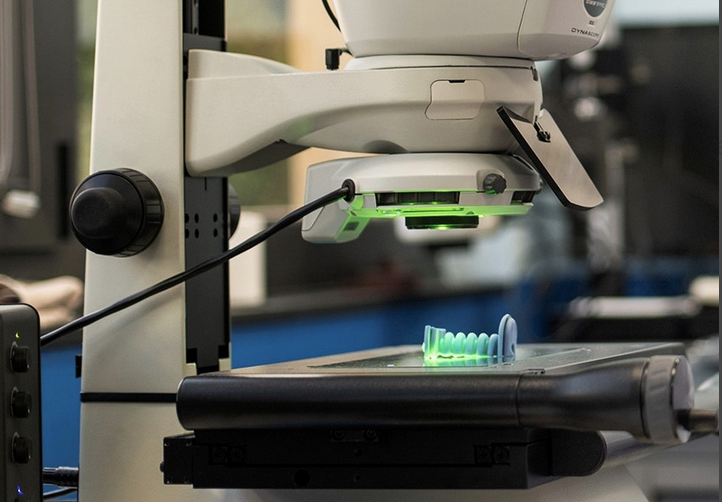
Case study: improving centering to reduce downtime
In the production of rubber products, a centering problem can emerge even in well-built moulds, simply after a certain number of cycles.
An effective solution to prevent this is the periodic replacement of pins and bushes.
An even more lasting improvement is achieved by using tapered centering: these reduce wear over time and maintain constant centering even after thousands of openings.
The advantage is concrete:
- Less waste
- mould always centred
- Continuous production and no unplanned interruptions.
A minimal technical intervention that translates into greater production efficiency and mould life.
Other signs of instability in rubber moulding
In addition to misalignment, there are other signs of instability that indicate the need for process control:
- Drool appears earlier than expected
- micro-scratches or surface defects on the moulded part
- difficulty in extraction or rubber residues in the cavity
- increasing frequency of mold cleaning operations
These phenomena do not always require invasive interventions: often targeted geometric checks and accurate control of the moulding parameters are enough to bring the process back to normal.
Precision, stability and quality: the winning trio in rubber moulding
Avoiding machine downtime in the moulding of rubber items means ensuring a balance between:
- Mould Accuracy
- Stability of moulding parameters, such as pressure, temperature, and vulcanization times
- Continuous quality control, to immediately identify repetitive variations or defects.
Only the integration of these three elements allows you to maintain high productivity, reduced waste and articles that always comply with technical specifications.
At OCS Stampi, every project stems from this philosophy: precision is the first step to productivity.
Do you want to receive periodic updates, technical insights and news from the world of rubber moulding?
Go to the contact box, enter your details and write “newsletter” in the message.
You will receive directly in your e-mail box the latest news from O.C.S.: https://www.ocs-stampi.it/en/contacts/

